Maximalist vs Minimalist Walls: Which Style Is Right for You?
Published: February 24, 2026 | Category: Style Guides Target keywords: Maximalist wall art, minimalist prints UK, gallery wall inspiration, aesthetic wall art, quiet luxury art, Japandi prints, dark academia prints, dopamine decor, Scandi style prints, Nordic minimalism, boho wall art UK, statement wall art UK, eclectic wall art UK
Two opposite philosophies dominate wall art in 2026. On one side: the maximalist approach — more art, more colour, more personality, walls covered with prints and objects that tell a story. On the other: the minimalist approach — one considered piece, a lot of breathing room, the art earning its place through the quality of what surrounds it.
Neither is objectively better. Both can look extraordinary. What matters is which one is right for your space, your personality, and the way you want to feel in your home.
This guide breaks down both approaches — and shows you how to execute each one well.
The case for minimalism
Minimalist wall art is not about having nothing on your walls. It's about having exactly the right thing — chosen carefully, placed deliberately, given room to breathe.
The minimalist approach draws on several contemporary interior aesthetics:
Japandi (the blend of Japanese and Scandinavian design) is perhaps the most influential interior style of the past five years. It values restraint, natural materials, and the quiet beauty of empty space. Japandi prints tend to be muted, organic, and compositionally spare — a single branch, a simple horizon line, a minimal abstract in earthy tones.
Quiet luxury — the aesthetic of understated, high-quality design — has moved from fashion into interiors. Quiet luxury wall art means one exceptional print in a beautiful frame, displayed with confidence. No clutter, no explanation needed.
Nordic minimalism and Scandi style prints share similar values: clean lines, natural light, a palette of whites, greys, and warm neutrals. Scandi wall art tends toward botanical illustration, abstract prints in soft palettes, and photography of natural landscapes.
How to do minimalism well
The single statement: One large print — A1 or A0 — on a wall that has nothing else on it. The art gets all the attention; the empty space around it amplifies rather than diminishes its presence.
The considered pair: Two prints hung symmetrically — the same size, same frame, related subject matter. This is the minimalist take on a gallery wall: exactly two pieces, placed with precision.
The lean: A large print leaned against the wall, slightly casual, apparently effortless. This is the art-world version of minimalism — the print is significant, but the display is deliberately low-key.
What minimalism gets wrong (when it does)
Minimalism fails when it tips from restrained into bare — when a room feels unfinished rather than considered. The difference is usually quality: one exceptional print in a room of beautiful things reads as minimalist; one mediocre print in a nearly empty room reads as incomplete.
If you're going minimal, invest in the print. One A0 museum-quality giclée print in a beautiful frame is worth more to a room than ten cheap prints.
The case for maximalism
Maximalist wall art is not about having everything on your walls. It's about having a lot of the right things — arranged with intention and held together by a coherent aesthetic thread.
Contemporary maximalism has several distinct aesthetics:
Dark academia is the aesthetic of candlelit libraries, leather-bound books, and old portraits. Dark academia prints tend toward vintage illustration, classical art reproductions, moody botanical prints, and anything that feels like it could belong in a Victorian study. The palette is dark: deep burgundy, forest green, charcoal, warm black.
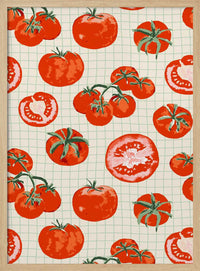
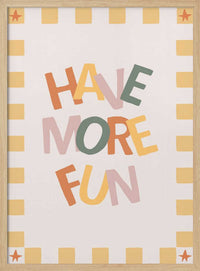
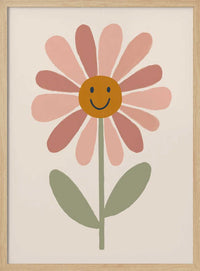
Dopamine decor is the joyful, colour-saturated opposite — bold colours, playful prints, maximalist arrangements that prioritise happiness over restraint. Colourful wall art in bright primary tones, retro illustration, and prints that make you smile.
Boho wall art draws on eclectic, global influences — a mix of styles, textures, and cultural references that feels collected rather than curated. The boho wall often mixes prints with other objects — woven wall hangings, plants, shelves of objects — creating a layered, lived-in effect.
Cottagecore is the aesthetic of the English countryside — wildflower prints, botanical illustration, vintage pastoral scenes. Soft, warm, romantic. A cottagecore gallery wall typically mixes botanical prints with vintage illustrations and framed pressed flowers.
Eclectic wall art UK is the broadest category — rooms that resist single-aesthetic categorisation and instead reflect the full range of the owner's taste. These are the hardest rooms to pull off but the most personal when they work.
How to do maximalism well
The through-line. Every great maximalist wall has something that holds it together — a palette, a subject, a frame style, a mood. Without a through-line, maximalism becomes chaos. With one, it becomes a collection.
The anchor piece. Start with one large, significant print and build around it. The anchor gives the arrangement a centre of gravity; everything else orbits it.
Consistent framing. In a maximalist arrangement where the prints vary widely in style and subject, consistent framing is one of the most effective ways to create cohesion. All black frames, all white frames, or all natural timber — pick one and stick to it across the entire wall.
Build slowly. The best maximalist walls are built over time, not designed all at once. Adding prints gradually — finding things that work with what's already there — produces arrangements that feel genuinely collected rather than assembled.
What maximalism gets wrong (when it does)
Maximalism fails when the through-line is missing — when a wall has too many colours, too many styles, too many competing focal points. The eye doesn't know where to go, and the room feels restless rather than rich.
The other common failure: cheap prints that look cheap at scale. In a minimalist room, one print carries everything; in a maximalist room, every print contributes to the overall impression. Mixing high-quality prints with low-quality ones pulls the whole arrangement down.
Finding your style
Most people aren't purely one or the other — they're somewhere on the spectrum between maximalist and minimalist, and that position shifts from room to room.
A useful exercise: save images of rooms you love on Pinterest or Instagram. After you've saved 20–30 images, look at them together. Are they mostly minimal? Mostly maximalist? Do different rooms attract you to different approaches?
Quick guide by aesthetic
| If you love... | You're probably... |
|---|---|
| Japandi, quiet luxury, Nordic minimalism | Minimalist |
| Dark academia, cottagecore, boho | Maximalist |
| Scandi, clean girl aesthetic | Minimalist leaning |
| Dopamine decor, eclectic, Pinterest aesthetic | Maximalist leaning |
| Gallery wall inspiration, salon walls | Maximalist |
| Statement single prints | Minimalist |
Room-by-room: which approach works where
Some rooms suit minimalism better; others are natural maximalist spaces.
Bedroom: Minimalism almost always wins in the bedroom. The bedroom is for rest, and visual complexity works against rest. One considered piece above the bed, or a simple pair of prints, creates calm without sacrifice.
Living room: Either approach can work, but the room's scale matters. Large living rooms suit maximalist gallery walls — the space can absorb the visual complexity. Smaller living rooms often benefit from a minimalist approach — one large print rather than many small ones.
Kitchen: Minimalism suits contemporary kitchens; maximalism suits more eclectic or country-style kitchens. A set of three botanical prints in matching frames is the middle ground that works in almost any kitchen.
Home office: This depends on whether you need energy or calm to work. Energetic personalities often work better with a more stimulating visual environment — a maximalist gallery wall. People who need calm and focus benefit from minimalism.
Hallway: The hallway is the natural home for a gallery wall — and gallery walls are inherently maximalist. The proportions of a hallway (long and narrow) suit a collection of prints more than a single piece.
The hybrid approach: considered maximalism
The most liveable approach for most people is what might be called "considered maximalism" — the density of maximalism applied with the intentionality of minimalism.
This means:
- More than one print per wall, but fewer than you might assume
- A palette that's constrained even if the styles vary
- Quality prints that can stand scrutiny at close range
- An arrangement that rewards looking — where there's always something new to notice
This is the sweet spot for most homes. Not the austerity of true minimalism; not the density of true maximalism. A collection of beautiful things, displayed with care, in a space that feels genuinely yours.
Browse our full collection — from bold maximalist gallery wall sets to minimal statement prints — all available in sizes from A3 to A0, framed or unframed, with fast UK delivery.